Warehouse Jobs Near Me: Finding the Right Opportunity
If you’ve searched warehouse jobs near me, you’re likely looking for stable, accessible employment that offers competitive pay, flexible schedules, and opportunities for career growth. Warehouse jobs are among the fastest-growing employment sectors, fuelled by the continued expansion of e-commerce, manufacturing, retail distribution, and supply chain operations. Whether you’re entering the workforce for the first time, changing careers, or looking for temporary work, warehouse positions can provide a reliable source of income with relatively low entry barriers.
Unlike many professions that require specialised qualifications or years of experience, warehouse jobs often offer paid training and allow new employees to start within days of applying.
Why Warehouse Jobs Are in High Demand
The logistics industry has experienced remarkable growth over the past decade, driven by the rapid rise of e-commerce, global trade, and consumer demand for faster deliveries. Every online order depends on a well-organised warehouse where employees receive inventory, manage stock, pick products, pack orders, and prepare shipments for delivery. As businesses invest in same-day and next-day shipping services, warehouses have become a vital part of modern supply chains.
This growing demand has created thousands of employment opportunities across industries, including e-commerce, retail, manufacturing, food distribution, pharmaceuticals, third-party logistics (3PL), wholesale, automotive, and electronics. Because these sectors operate year-round and frequently expand their distribution networks, warehouse employers consistently recruit both experienced workers and entry-level candidates, making warehouse jobs one of the most accessible and reliable career options available.
Benefits of Working in a Warehouse
- Quick Hiring Process: Many employers hold regular hiring events and interviews, with some offering same-day job offers and fast onboarding.
- No College Degree Required: Most warehouse positions only require a high school diploma or equivalent, while many entry-level roles have no formal education requirements.
- Flexible Work Schedules: Choose from full-time, part-time, weekend, night, early morning, or seasonal shifts to suit your lifestyle.
- Competitive Pay: Warehouse workers often earn attractive hourly wages, with additional income available through overtime, night-shift differentials, and performance bonuses.
- Career Growth Opportunities: Entry-level employees can advance into roles such as team leader, warehouse supervisor, inventory specialist, logistics coordinator, or operations manager.
- Paid Training: Many companies provide on-the-job training, allowing new hires to learn essential skills without prior experience.
- Employee Benefits: Full-time employees may receive health insurance, paid leave, retirement plans, tuition assistance, and employee discounts.
Common Types of Warehouse Jobs
Warehouse Associate
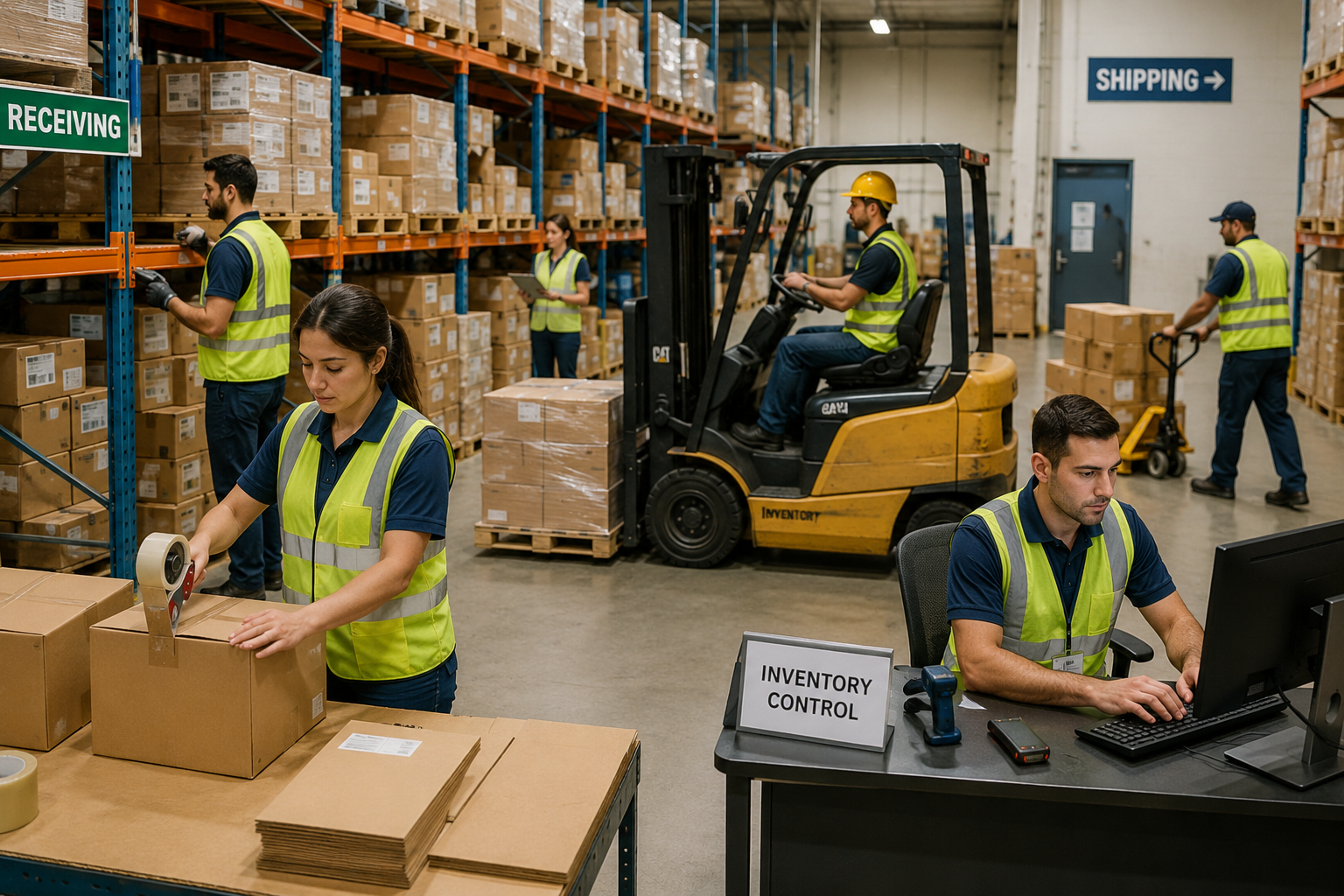
A warehouse associate is responsible for carrying out a variety of general warehouse duties that keep daily operations running smoothly. Common responsibilities include loading and unloading trucks, sorting incoming inventory, organising products on shelves, maintaining a clean and safe work environment, and assisting other departments as needed. This is one of the most common entry-level warehouse positions and typically requires little to no previous experience, making it an excellent starting point for individuals beginning a career in logistics.
Order Picker
An order picker is responsible for locating and collecting products based on customer orders using handheld scanners or digital picking systems. Their daily tasks include reading order lists, selecting the correct items from warehouse shelves, scanning products for inventory accuracy, preparing orders for packing, and meeting productivity targets. Because customer satisfaction depends on receiving the right products, accuracy is just as important as speed in this role.
Packer
A packer prepares products for shipment by ensuring every order is complete, secure, and ready for delivery. Duties include inspecting items for damage, wrapping fragile products, placing goods into appropriate packaging, printing and attaching shipping labels, sealing cartons, and checking that each package meets company quality standards. Packers play an essential role in preventing damaged shipments and ensuring customers receive their orders in excellent condition.
Forklift Operator
A forklift operator is responsible for safely transporting heavy pallets and materials throughout the warehouse using specialised equipment. Daily responsibilities include loading and unloading trailers, stacking pallets, moving inventory between storage locations, supporting shipping and receiving operations, and conducting routine equipment inspections. While some positions require previous certification, many employers provide forklift training and certification as part of the onboarding process.
Inventory Control Clerk
An inventory control clerk focuses on maintaining accurate stock records and ensuring inventory levels match warehouse databases. Their responsibilities include performing cycle counts, conducting inventory audits, investigating stock discrepancies, tracking shortages or damaged goods, and updating warehouse management systems. This role requires strong attention to detail and helps businesses minimise inventory errors and improve operational efficiency.
Shipping and Receiving Clerk
A shipping and receiving clerk manages the flow of goods entering and leaving the warehouse. Their daily duties include verifying incoming shipments, checking delivery documents, recording inventory, preparing outgoing orders, scheduling transportation with carriers, and communicating with suppliers or delivery companies. This position plays a critical role in ensuring shipments are processed accurately and delivered on time.
Warehouse Supervisor
A warehouse supervisor oversees the daily activities of warehouse staff to ensure operations run safely and efficiently. Responsibilities include managing employee schedules, assigning tasks, monitoring productivity, enforcing workplace safety standards, training new team members, and resolving operational challenges. Most warehouse supervisors begin their careers in entry-level positions and earn promotions through experience, leadership skills, and consistent performance.
Full Time vs Part Time Warehouse Jobs
| Feature | Full-Time Warehouse Jobs | Part-Time Warehouse Jobs |
| Working Hours | Typically 35–40+ hours per week | Usually 10–30 hours per week |
| Best For | Individuals seeking a long-term career and stable income | Students, parents, retirees, and those looking for extra income |
| Employee Benefits | Often includes health insurance, paid holidays, retirement plans, and paid leave | Limited benefits, depending on the employer |
| Training | Comprehensive paid training and onboarding | Basic job-specific training provided |
| Career Growth | Greater opportunities for promotions into supervisory and management roles | May lead to full-time employment based on performance |
| Work Schedule | Fixed day, evening, or night shifts with consistent weekly hours | Flexible schedules, including evenings, weekends, and seasonal shifts |
| Overtime Opportunities | Frequently available during peak seasons | Available in some companies but generally less common |
| Income Stability | Consistent weekly earnings with predictable hours | Variable income based on scheduled shifts |
| Job Security | Higher long-term job stability | Often seasonal, temporary, or flexible depending on business needs |
Seasonal Warehouse Jobs
Warehouses hire thousands of additional workers during peak shopping periods.
Busy hiring seasons include:
- Holiday shopping
- Black Friday
- Cyber Monday
- Back-to-school season
- Summer inventory periods
Many seasonal workers receive permanent employment offers after demonstrating strong performance.
Industries That Hire Warehouse Workers
Warehouse careers extend far beyond online retail, offering employment opportunities across a wide range of industries that depend on efficient inventory management and distribution. Businesses in sectors such as e-commerce, grocery distribution, healthcare, pharmaceuticals, construction materials, furniture, clothing retail, automotive parts, electronics, manufacturing, wholesale supply, and agriculture all require skilled warehouse workers to receive, store, organise, and dispatch products.
As these industries operate throughout the year and rely on well-managed supply chains to meet customer demand, warehouse professionals continue to enjoy strong job security and consistent employment opportunities. This broad demand also gives job seekers the flexibility to choose an industry that matches their interests while building a long-term career in logistics and supply chain operations.
Register with Staffing Agencies
Many warehouses recruit through temporary staffing companies.Benefits include:
- Faster placement
- Weekly pay
- Multiple job opportunities
- Temporary-to-permanent positions
Resume Tips for Warehouse Jobs
A well-written warehouse resume should demonstrate that you are reliable, physically capable, and able to work efficiently in a fast-paced environment. Include relevant information such as your previous employment, physical labour experience, teamwork achievements, equipment operation skills, forklift certification, safety training, attendance record, and basic computer knowledge. Even if you have not worked in a warehouse before, experience in retail, construction, hospitality, manufacturing, or delivery services can showcase transferable skills that employers value. Keep your resume clear, concise, and focused on your strengths to increase your chances of being shortlisted.
Interview Tips
Warehouse interviews typically focus on your reliability, availability, and willingness to work in a physically demanding environment. Employers commonly ask questions such as why you want the job, whether you can lift heavy items, if you’re comfortable standing for long periods, and whether you’re available to work weekends or overtime. They may also ask about your experience working in fast-paced environments. Answer each question honestly while emphasising your dependability, positive attitude, teamwork, and eagerness to learn new skills, as these qualities are highly valued by warehouse employers.
🚀 Join our team
We’re looking for passionate people. Start your application.
Congratulations!
You have successfully applied for the job.
Thank you for your application. Our recruitment team will review your information and contact you if you are shortlisted.
What to Expect on the Job
Warehouse work is physically active and fast-paced, requiring employees to stay productive throughout their shifts. A typical day may involve walking several kilometres, standing for extended periods, lifting and moving boxes, operating handheld barcode scanners, organising inventory, loading and unloading trucks, and following strict safety procedures. Many warehouses also monitor productivity using warehouse management software and scanning systems, so maintaining accuracy and efficiency is essential for success.
Technology Used in Modern Warehouses
Modern warehouses rely on advanced technology to improve productivity, reduce errors, and streamline inventory management. Employees commonly work with barcode scanners, RFID tracking systems, Warehouse Management Systems (WMS), conveyor belts, automated sorting equipment, robotics, voice-picking devices, and mobile inventory applications. Familiarity with these technologies not only helps workers perform their duties more efficiently but also improves their chances of promotion into specialised logistics and inventory management roles.
Workplace Safety
Safety is one of the highest priorities in every warehouse, as employees regularly work with heavy equipment, machinery, and large volumes of inventory. Workers are expected to wear personal protective equipment (PPE), use proper lifting techniques, report hazards immediately, keep aisles clear, operate machinery responsibly, attend safety meetings, and follow emergency procedures at all times.
Most employers provide comprehensive safety training during onboarding to ensure employees understand workplace regulations and minimise the risk of accidents and injuries.
Salary Expectations
Warehouse salaries vary depending on factors such as location, employer, experience, job responsibilities, and shift schedules. Many employers offer competitive hourly wages along with additional earning opportunities through overtime pay, night shift premiums, weekend bonuses, attendance incentives, performance rewards, and holiday pay.
Employees who gain experience or move into supervisory and specialised positions generally earn significantly higher salaries, making warehouse work an attractive long-term career option.
Career Growth Opportunities
Warehouse jobs offer excellent opportunities for career advancement, with many companies promoting employees from within. A typical career path may begin as a Warehouse Associate, followed by progression to Team Lead, Shift Supervisor, Operations Supervisor, Warehouse Manager, and eventually Distribution Centre Manager.
Employees may also pursue specialised careers as Inventory Analysts, Logistics Coordinators, Supply Chain Planners, Procurement Specialists, Transportation Managers, or Operations Directors. With experience, additional training, and strong performance, warehouse work can lead to rewarding leadership roles within the logistics and supply chain industry.
Advantages of Warehouse Jobs
Warehouse employment offers numerous benefits that appeal to job seekers looking for stability and career growth. These roles provide regular hiring opportunities, paid training, flexible work schedules, overtime opportunities, competitive benefits, and clear pathways for promotion.
Because warehouse work is physically active, it also appeals to individuals who prefer hands-on tasks rather than desk-based jobs. Additionally, the experience gained in warehouse operations develops valuable transferable skills that can lead to careers in logistics, transportation, inventory management, and supply chain operations.
Challenges to Consider
Although warehouse work offers many advantages, it also comes with physical and operational challenges that prospective employees should understand. Workers often spend long hours standing, lifting heavy items, performing repetitive tasks, and meeting productivity targets in fast-paced environments. Some positions require rotating shifts, overnight work, or increased workloads during busy seasons, while certain warehouses may expose employees to varying temperatures depending on the facility. Understanding these challenges beforehand helps job seekers prepare physically and mentally, increasing their chances of long-term success in the role.
Final Thoughts
Warehouse jobs remain one of the most accessible and dependable employment options for individuals seeking stable income, flexible schedules, and opportunities for career advancement. Whether you’re searching for your first job, returning to the workforce, or looking for a career change, warehouse positions provide valuable experience that can lead to long-term success in logistics and supply chain management.
By creating a strong resume, applying to multiple employers, remaining flexible with your availability, and developing additional skills such as forklift operation or inventory management, you can significantly improve your chances of securing a rewarding role.
FAQs
Do warehouse jobs require previous experience?
No. Many employers hire entry-level workers and provide paid on-the-job training.
Are warehouse jobs physically demanding?
Yes. Most positions involve walking, standing, lifting, bending, and repetitive tasks throughout the shift.
Can I work part-time in a warehouse?
Absolutely. Many employers offer flexible part-time, evening, weekend, and seasonal positions.
How quickly can I get hired?
Some companies hire within a few days, while others complete the process within one to three weeks depending on demand and background checks.
Is warehouse work a good long-term career?
Yes. Many employees progress into supervisory, logistics, inventory management, and operations leadership positions with higher salaries and greater responsibilities.