Automotive Jobs Near Me: Auto Careers Local Jobs & Opportunities
If you’ve searched automotive jobs near me, you’re likely looking for more than just a list of openings — you want to understand what’s out there, what pays well, what qualifications you need, and how to actually land the job. This guide covers everything, from entry-level positions to specialised careers, so you can search smarter and apply with confidence.
Whether you’re interested in working at a dealership, repair shop, body shop, parts store, or fleet operation, there are career options for different skill levels and backgrounds. With the right training, practical experience, and job-search strategy, an entry-level automotive position can also become a pathway to a long-term career.
What Counts as an Automotive Job
The automotive industry is much bigger than mechanics turning wrenches. It spans manufacturing, repair, sales, design, logistics, and technology, which means there’s a role for almost every skill set and experience level. Understanding the full scope helps you widen your search beyond the obvious job title.
You can find opportunities in dealerships, independent garages, parts suppliers, body shops, fleet operations, and vehicle manufacturers. From hands-on technical work to customer service, administration, and management, the industry offers multiple career paths for both beginners and experienced professionals.
Types of Automotive Jobs You Can Find Near You
Automotive Technicians and Mechanics
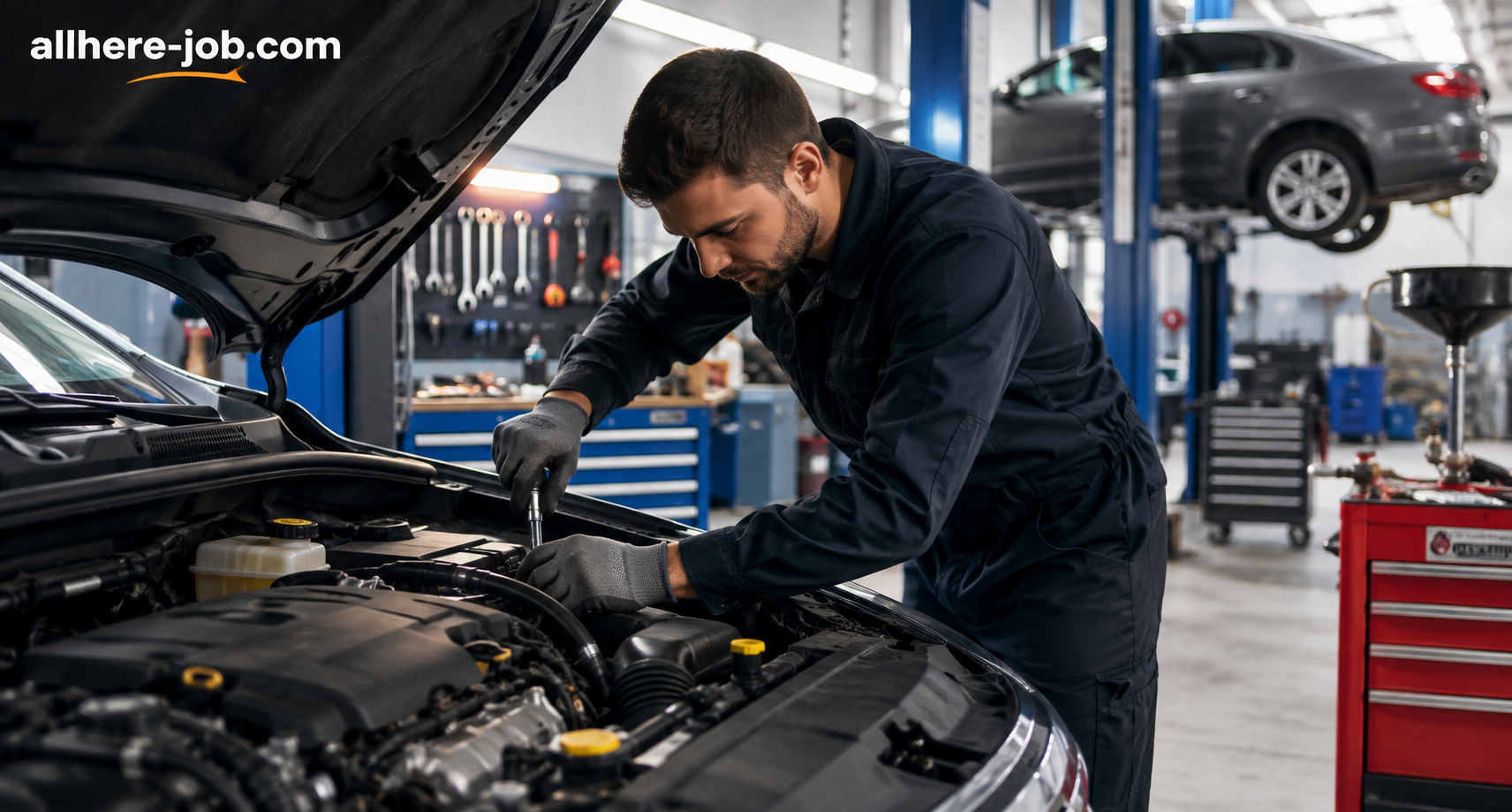
The backbone of the industry. This includes general service technicians, diagnostic specialists, brake and suspension techs, transmission specialists, and master mechanics. Many shops also hire entry-level lube techs who can work their way up through on-the-job training or certification programmes. Technicians who develop strong diagnostic and electrical skills can qualify for more specialised positions. Continued training is also important as modern vehicles increasingly rely on advanced electronics and computerised systems.
Auto Body and Collision Repair
Body technicians, painters, and frame straighteners work at collision centres and dealership body shops repairing vehicles after accidents. This field often pays well for skilled technicians and has strong demand due to steady collision volume. Other opportunities include paint preparation, estimating, glass installation, and vehicle detailing. Attention to detail, practical skills, and knowledge of repair procedures are particularly valuable in this field.
Automotive Manufacturing and Assembly
Plant jobs include assembly line workers, quality control inspectors, machine operators, and industrial maintenance technicians. These roles are common near manufacturing hubs and often come with strong benefits and union protections. Manufacturing employers may also hire production supervisors, robotics technicians, material handlers, and safety specialists. Technical training and experience with machinery, automation, or quality-control systems can improve your prospects in this area.
Parts, Logistics, and Retail
Auto parts stores, warehouses, and distribution centres hire counter associates, warehouse staff, delivery drivers, and inventory managers to keep the supply chain moving. These roles can suit people who have automotive knowledge as well as those with customer service, logistics, or inventory experience. Strong organisation and attention to detail are important because accurate parts identification and timely delivery directly affect repair operations.
Automotive Sales and Support
Beyond dealership sales floors, this includes roles at auto auctions, leasing companies, insurance adjusters specialising in vehicle claims, and rental car locations. Customer service, communication, negotiation, and administrative skills can be valuable across these positions. Some roles also offer opportunities to earn commissions or progress into supervisory positions as employees gain experience.
Skills and Qualifications Employers Look For
Requirements vary widely by role, but common expectations include:
- ASE certification (Automotive Service Excellence) for technician roles — often preferred, sometimes required
- A valid driver’s license for nearly any hands-on role
- Manufacturer-specific training for dealership technician positions (Ford, Toyota, GM, etc.)
- Basic computer literacy for diagnostic software and service software systems
- Physical stamina for technician, body shop, and warehouse roles involving standing, lifting, and repetitive motion
- Customer service skills for advisor, sales, and front-of-house positions
Entry-level roles often require little more than a willingness to learn, with many shops and dealerships offering paid training or apprenticeship-style programs.
How to Search for Automotive Jobs Near You
| Strategy | What to Do | Why It Helps |
| Use Specific Job Titles | Search terms such as “automotive technician jobs near me” or “service adviser jobs near me.” | Finds more relevant and targeted vacancies. |
| Check Dealership Websites | Visit local dealership and repair-shop career pages directly. | Some openings may not appear on general job boards. |
| Search Locally First | Start with a small location radius and expand if necessary. | Helps reduce long commutes and improves local results. |
| Check Manufacturer Portals | Explore career networks for brands such as Toyota, Ford, and GM. | Can uncover dealership and manufacturer opportunities. |
| Use Trade Schools | Check automotive schools and certification programmes for job-placement support. | Schools often connect graduates with local employers. |
| Set Job Alerts | Create alerts for technician, mechanic, parts, and dealership positions. | Helps you apply quickly when new vacancies are posted. |
Salary Expectations
Automotive pay varies significantly depending on the role, location, experience, qualifications, and employer. Entry-level technicians and lube technicians may start with modest hourly wages but can increase their earnings through experience and certifications, while certified or master technicians can earn considerably more, particularly under flat-rate or performance-based pay structures.
Auto body technicians and painters may also earn strong wages, while dealership sales consultants often receive a combination of base pay and commission, making their income vary from month to month. Manufacturing and automotive plant positions may offer structured pay scales, overtime, and employee benefits. Because employers use different compensation models, always confirm whether a position is hourly, flat-rate, commission-based, or salaried before accepting an offer.
Tips for Landing an Automotive Job Near You
- Highlight hands-on experience, even informal experience like personal vehicle work, if you’re entering the field.
- List certifications prominently ASE, manufacturer-specific training, or trade school credentials should be easy to spot on a resume.
- Apply directly at shops, not just online. Many independent shops still hire based on walk-ins or local reputation.
- Be ready to discuss availability, since many roles involve early mornings, Saturdays, or on-call scheduling.
- Bring a clean driving record if the role involves test drives, deliveries, or vehicle transport this often gets checked early in the process.
FAQs
What are the most common automotive jobs near me?
Common positions include mechanics, automotive technicians, lube technicians, service advisers, auto body technicians, parts specialists, detailers, and dealership sales consultants.
Can I get an automotive job without experience?
Yes. Entry-level roles such as lube technician, shop assistant, vehicle detailer, parts assistant, and apprentice technician can suit candidates with limited experience.
How much do automotive jobs pay?
Pay depends on the position, location, experience, qualifications, and employer. Technicians and specialised professionals can generally earn more as they develop their skills.
Do I need certification to become an automotive technician?
Certification is not required for every position, but automotive training and recognised certifications can improve your employment prospects.
Where can I find automotive jobs near me?
Search major job boards, dealership career pages, repair shops, body shops, parts retailers, fleet companies, and local automotive businesses.
Final Thoughts
Automotive jobs near me covers a wide, fast-moving field technicians, dealership staff, manufacturing workers, and specialized EV technicians are all part of the same industry with very different day-to-day work.
The best strategy is to search with specific job titles, check both major job boards and direct employer career pages, and stay ready to apply quickly once trade-specific certifications or experience make you a strong candidate. With demand for skilled automotive workers remaining steady, local opportunities are consistently available for those ready to start or grow a career in the field.