EKG Technician Jobs: Technician Jobs Salary Training & Career
If you’re looking for a healthcare career that offers strong job stability, a short training path, and the chance to make a real difference in patients’ lives, becoming an EKG technician is worth serious consideration. This guide covers everything you need to know about EKG technician jobs, from daily responsibilities to salary expectations and how to get started.
You’ll also learn about the skills, certifications, and work environments that can help you succeed in this growing healthcare field. Whether you’re just starting your career or looking for a change, an EKG technician role can provide a practical pathway into the medical profession.
What Does an EKG Technician Do?
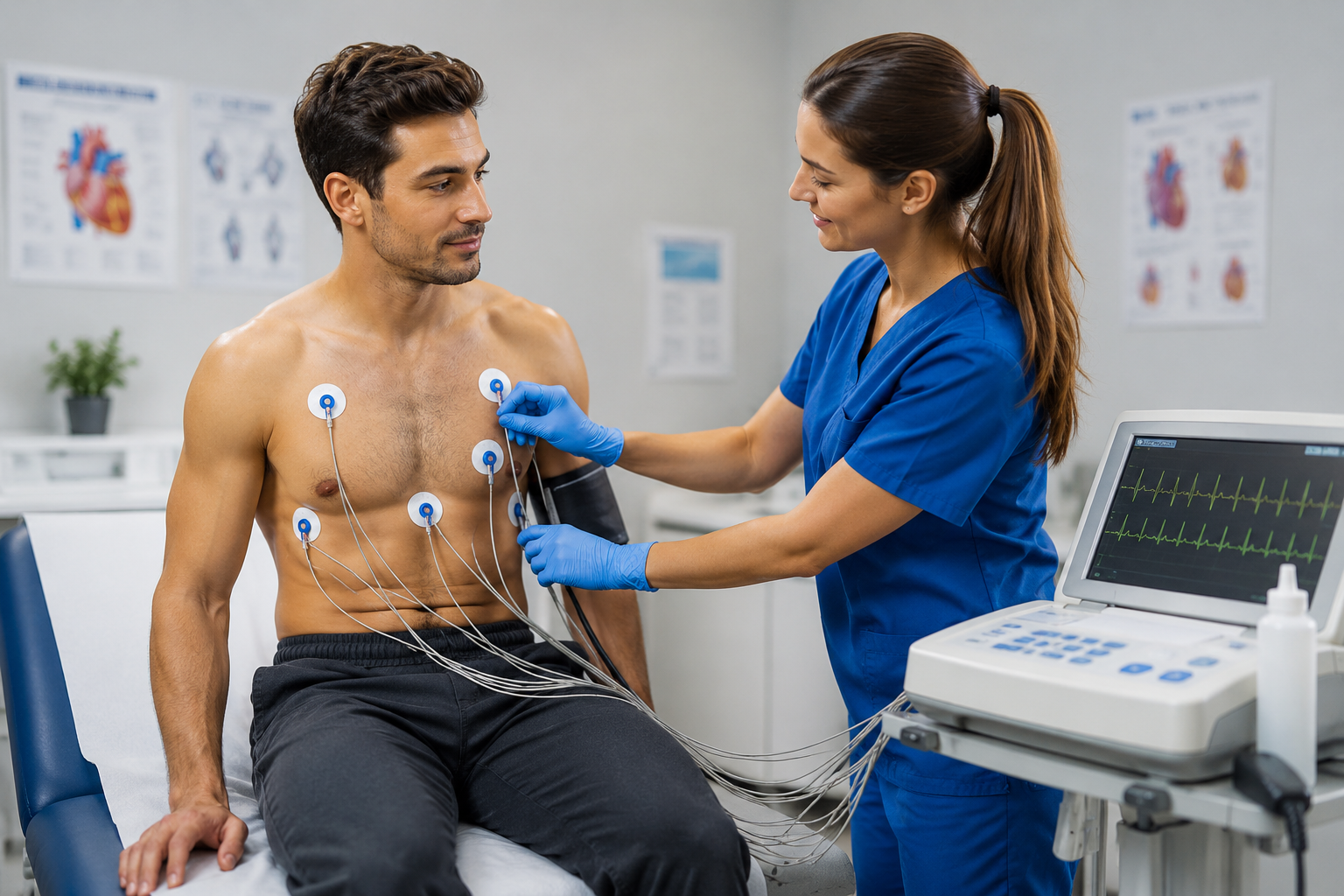
An EKG (electrocardiogram) technician is a healthcare professional trained to operate specialised equipment that records the electrical activity of a patient’s heart. The information collected during these tests helps doctors diagnose and monitor heart conditions, including arrhythmias, heart attacks, and other cardiovascular issues. On a typical day, EKG technicians prepare patients for testing by explaining the procedure and carefully attaching electrodes to the chest, arms, and legs.
They operate EKG machines to capture accurate heart rhythm readings, monitor Holter devices and stress test equipment, and recognise abnormal results that may require immediate attention from physicians or nurses. Their responsibilities also include maintaining and calibrating medical equipment, keeping accurate patient records and test results, and ensuring that patients remain comfortable and safe throughout the testing process.
Day in the Life of an EKG Technician
While no two days look exactly alike, a typical shift often follows a similar rhythm:
- Start of shift reviewing the day’s patient schedule and checking equipment is functioning properly
- Patient prep greeting patients, explaining the procedure, and answering questions to ease nerves
- Testing attaching electrodes and running standard EKGs, stress tests, or setting up Holter monitors for 24-48 hour monitoring
- Documentation logging results into the patient’s chart and flagging anything unusual for physician review
- Equipment care cleaning and disinfecting equipment between patients, restocking supplies
- Communication relaying results or concerns to nurses and doctors, and coordinating follow-up testing if needed
In hospital settings, technicians may also be called to patient bedsides or the ER for urgent EKGs, which adds unpredictability to the role. In clinics, the pace tends to be more scheduled and routine.
Where EKG Technicians Work
EKG technicians are employed in a variety of healthcare settings, giving them flexibility to choose an environment that suits their interests and career goals. Many work in hospitals, particularly in emergency rooms, cardiology departments, and intensive care units (ICUs), where they perform important cardiac tests for patients.
Others work in outpatient clinics, cardiology practices, diagnostic and imaging centres, nursing homes, long-term care facilities, and physicians’ offices. Some EKG technicians also work for mobile testing companies, travelling to different healthcare facilities or patients’ locations to provide cardiac testing services.
Skills Needed to Become an EKG Technician
Successful EKG technicians need a combination of technical knowledge, attention to detail, and strong interpersonal skills. They must be highly detail-oriented to accurately place electrodes, record heart rhythms, and identify potential abnormalities in test results. Technical aptitude is also important because technicians regularly operate and maintain specialised medical equipment. Strong communication skills help them explain procedures clearly and reassure patients who may be nervous or uncomfortable.
Physical stamina is useful because the job may require standing for long periods and moving between patients, while composure under pressure allows technicians to remain calm and respond appropriately when abnormal readings or unexpected situations occur.
EKG Technician vs. Similar Roles
It’s easy to confuse EKG technicians with other cardiac and diagnostic roles. Here’s how they differ:EKG Technician vs. Cardiovascular Technologist – Cardiovascular technologists typically complete a longer associate degree program and can perform more advanced procedures, such as assisting with cardiac catheterizations. EKG technicians focus specifically on electrocardiogram testing and monitoring.
EKG Technician vs. Phlebotomist – Phlebotomists specialize in drawing blood, while EKG technicians focus on cardiac testing. Many entry-level healthcare workers pursue both certifications to increase job flexibility, since some employers combine the roles.EKG Technician vs. Medical Assistant – Medical assistants have a broader scope that includes taking vitals, assisting with exams, and administrative tasks, while EKG technicians have a narrower, more specialized focus on cardiac diagnostics.
Education and Certification
One of the biggest draws of this career is the relatively short path to employment. Most EKG technician programs take anywhere from a few weeks to six months to complete, compared to years of schooling for many other healthcare roles.
Typical steps to becoming an EKG technician:
Becoming an EKG technician typically starts with earning a high school diploma or GED, which is the baseline requirement for most training programmes. The next step is to complete an EKG technician training programme offered by community colleges, vocational schools, or hospital-based programmes, where students learn about anatomy, cardiac physiology, and how to operate EKG equipment.
Although certification is not always legally required, earning a recognised credential can significantly improve job prospects. Common options include the Certified EKG Technician (CET) certification from the National Healthcareer Association (NHA) and the Certified Cardiographic Technician (CCT) certification from Cardiovascular Credentialing International (CCI). Many training programmes also require students to complete clinical hours or an externship, providing supervised hands-on experience before entering the workforce.
Salary Expectations
EKG technician salaries vary based on location, employer, and experience level. Generally, pay is competitive for the amount of training required, and technicians in hospital settings or those with additional certifications (such as phlebotomy or Holter monitoring) often earn more. Salaries also tend to be higher in metropolitan areas and states with a higher cost of living.
Job Outlook
Demand for EKG technicians remains steady, driven by:
- An aging population requiring more cardiac monitoring
- Rising rates of heart disease and related conditions
- Expansion of outpatient and diagnostic testing centers
- Continued need for cardiac care across hospital departments
Because the training period is short and the entry barrier is low compared to other clinical roles, it’s also a popular choice for people looking to break into healthcare quickly or to use as a stepping stone toward further education, such as becoming a cardiovascular technologist or nurse.
Career Advancement Opportunities
Working as an EKG technician is often just the beginning of a rewarding healthcare career. Many technicians use their experience in the role to develop valuable clinical skills and move into higher-paying or more specialised positions. With additional education and training, they may advance to roles such as cardiovascular technologists or technicians, who perform more advanced cardiac imaging and procedures, or cardiac sonographers (echocardiographers),
who use ultrasound technology to create detailed images of the heart. Some EKG technicians also pursue careers as registered nurses (RNs), using their healthcare experience while completing nursing prerequisites and education. Others specialise as cardiac monitor technicians, focusing on continuous heart monitoring in intensive care or telemetry units, while experienced professionals may progress into EKG department supervisor roles overseeing teams of technicians in larger hospital systems.
Pros and Cons of Being an EKG Technician
Pros
- Short training period compared to most healthcare careers
- Lower upfront education costs
- Steady demand across many types of facilities
- Meaningful, patient-facing work
- A practical stepping stone into other healthcare careers
Cons
- Entry-level pay can be modest compared to more advanced clinical roles
- Shift work may include nights, weekends, or on-call hours
- The job can be physically demanding, with a lot of time on your feet
- Limited scope of practice compared to roles like cardiovascular technologists
How to Find EKG Technician Jobs
Finding an EKG technician job is easier when you use multiple job-search strategies. Most large hospital systems post open positions directly on their career pages, making them a valuable resource for finding local opportunities. Online job boards such as Indeed, ZipRecruiter, and LinkedIn also regularly list EKG technician vacancies across different healthcare settings.
Healthcare-specific staffing agencies can be another useful option, as they often connect qualified technicians with temporary, contract, or permanent positions. In addition, networking through your EKG technician training programme can lead to valuable opportunities, as many schools have partnerships with local hospitals, clinics, and other healthcare organisations that may offer job placement assistance.
🚀 Join our team
We’re looking for passionate people. Start your application.
Congratulations!
You have successfully applied for the job.
Thank you for your application. Our recruitment team will review your information and contact you if you are shortlisted.
Tips for Landing Your First EKG Technician Job
- Get certified – it sets you apart from applicants who only completed training without certification.
- Highlight clinical experience – emphasize any externship or hands-on hours on your resume.
- Consider additional certifications – phlebotomy or CPR/BLS certification can make you a more attractive candidate.
- Be flexible with shifts – many entry-level roles require night, weekend, or on-call availability, especially in hospitals.
- Apply broadly – outpatient clinics and diagnostic centers often have less competition than large hospital systems.
FAQs
How long does it take to become an EKG technician?
Most training programs take anywhere from a few weeks to six months, depending on whether you attend part-time or full-time and whether the program includes an externship.
Do I need a college degree to become an EKG technician?
No. Most positions require only a high school diploma or GED plus completion of an EKG technician training program and, ideally, certification./
What’s the difference between an EKG and an ECG?
Nothing — they’re the same test. “EKG” comes from the German spelling (Elektrokardiogramm), while “ECG” is the English abbreviation. Both terms are used interchangeably in healthcare settings.
Can I work as an EKG technician while studying for another healthcare career?
Yes. Many nursing and cardiovascular technology students work as EKG technicians to gain clinical experience and income while completing their degrees.
Is the job physically demanding?
It can be. Technicians are often on their feet for much of the shift, moving between patient rooms and occasionally responding to urgent requests in hospital settings.
Final Thoughts
EKG technician jobs offer a practical entry point into the healthcare field, combining short training time with meaningful patient interaction and solid job stability. For those interested in cardiology or looking to build a foundation for further healthcare education, this career path is well worth exploring.
With the right training and certification, you can find opportunities in hospitals, clinics, diagnostic centres, and other healthcare settings. As you gain experience, you can also pursue advanced certifications and move into specialised cardiac or nursing careers.